
InfiniOne
  • Services
    • AI Strategy & Readiness
    • AI Integration
    • Workflow Automation
    • RAG & Knowledge Systems
    • Custom AI Development
    • AI Agents
    • Conversational AI
    • Managed AI Ops
  • Industries
    • Real Estate
    • Logistics & Supply Chain
    • SaaS & Startups
    • Financial Services
    • Banking
    • Healthcare
    • Retail & eCommerce
    • Manufacturing
    • Professional Services
  • Work
  • Method
  • Insights
  • About
Book a working session
Loading
InfiniOne

Your embedded AI team.

Services

  • AI Strategy & Readiness
  • AI Integration
  • Workflow Automation
  • RAG & Knowledge Systems
  • Custom AI Development
  • AI Agents
  • Conversational AI
  • Managed AI Ops

Industries

  • Real Estate
  • Logistics & Supply Chain
  • SaaS & Startups
  • Financial Services
  • Banking
  • Healthcare
  • Retail & eCommerce
  • Manufacturing
  • Professional Services
  • Marketing & Agencies

Company

  • About
  • Case studies
  • Method
  • Insights
  • Contact
© 2026 InfiniOne LLC·Building software since 2012·Privacy·Terms
  1. Home/
  2. Insights/
  3. AI Got Cheap. Integration Is Still the Hard Part.

AI Got Cheap. Integration Is Still the Hard Part.

Model access now costs dollars a month.
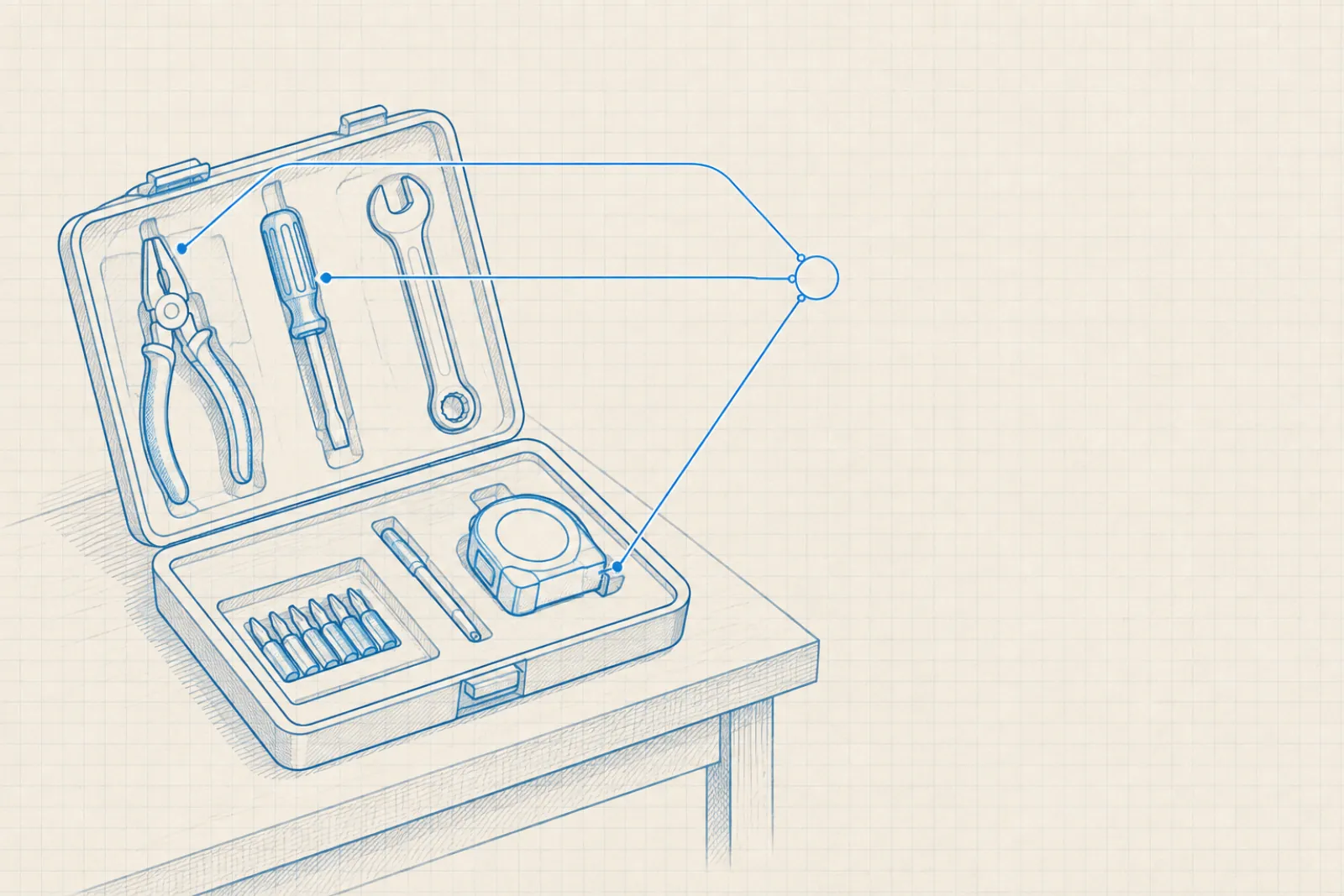
Blueprint of an open tool case on a workbench holding pliers, a screwdriver, a spanner and a tape measure, with one routed line leaving it

Hassan Sarwar · April 15, 2025

Access to capable language models now costs dollars a month through hosted APIs, so the model is rarely the constraint. The expensive, slow work is integration: connecting a model to the CRM, ERP, ticket queue and spreadsheets a company already runs, then keeping its answers correct as that data changes.

That shift matters for how you plan. A pilot that proves a model can summarise a document is not the project. The project is the plumbing, the permissions, the evaluation set and the runbook that let the summary land in the system where somebody acts on it.

The tools are cheap. The plumbing is not.

Three things got cheap at once: hosted model APIs you pay for by usage, open-source orchestration tools you can self-host, and cloud compute you rent by the minute. None of them require a research team. All of them stop at the edge of your own systems.

The cost that did not fall is the cost of the last mile: authenticating against your CRM, mapping your field names, handling the records that do not match the schema, and deciding what happens when the model is unsure.

  • Hosted frontier-model APIs bill per token and need no infrastructure from you.
  • Open-source orchestration runs on your own cloud with no per-task fee.
  • Retrieval over your own documents needs an embedding pipeline and a scored evaluation set, not a bigger model.
  • Everything above still has to reach the system your team actually works in.

Where AI pays back first

The processes worth automating first share a shape: they run often, they follow a rule a person could write down, and somebody currently does them by copying between two screens. Rare, judgement-heavy work is the worst place to start, because you cannot build an evaluation set for a process that happens twice a year.

Start by counting. How many times a week does this happen, how long does each one take, and what does a wrong answer cost? If you cannot answer those three questions, the first piece of work is measurement, not model selection.

  • Intake and routing: classify an inbound email, ticket or form and put it in the right queue with the right fields filled in.
  • Document extraction: pull structured fields out of invoices, leases, rent rolls or statements that arrive in inconsistent layouts.
  • Retrieval over your own content: answer staff and customer questions from your policies, product docs and records instead of from the open web.
  • Follow-up: draft the reply, the summary or the next-step record, and leave a human to approve it.

What to ask before you build

A short assessment answers more than a long pilot. Ours typically runs one to two weeks and it is allowed to conclude that AI is the wrong tool for the process you brought. Reaching that conclusion in week two beats discovering it in month four.

The questions that decide a project are boring ones: which system holds the record of truth, who is allowed to see it, what the current error rate is, and how you will know next quarter whether the thing still works.

  • Which system is the record of truth, and can we write to it?
  • What is the current baseline: volume, time per item, error rate?
  • What does a wrong answer cost, and who reviews it before it ships?
  • What does the evaluation set look like, and who re-runs it after a model upgrade?

Start with one process

Pick the single process that costs your team the most hours, measure it for a week, and scope an integration against that number. One working integration in production teaches you more about your own data than six months of evaluating vendors, and it gives the next project a baseline to argue from.

If you want a second opinion on which process to pick, bring it to a working session. Thirty minutes, no deck, and a written go or no-go at the end.

Where this work lives.

Related services

  • AI Strategy & ReadinessA short assessment that maps your systems and ranks use cases by impact.→
  • AI IntegrationLLMs and agents connected to the CRM, ERP and databases you already run.→

More

  • The Integration LadderAssisted, automated, agentic, and how to move between them.→
  • All insightsEvery post on this site.→
  • ServicesWhat we build, and on which rung.→

Bring one broken process.

No discovery marathon. Bring one process that costs your team hours and we will map what an integration would look like in a free 30-minute working session.

Book a working session→